AI is moving from simply answering questions to actually getting work done. That shift is one reason Salesforce Agentforce is getting so much attention from businesses exploring AI-powered CRM.
But there is one question companies should answer before jumping in:
Is your Salesforce environment actually ready for AI agents?
Agentforce can plan, execute tasks, interact with customers, and work with business data. But the results depend heavily on the systems, data, processes, and safeguards behind it. Salesforce itself recommends a structured approach covering planning, building, testing, deployment, and monitoring when implementing an AI agent.
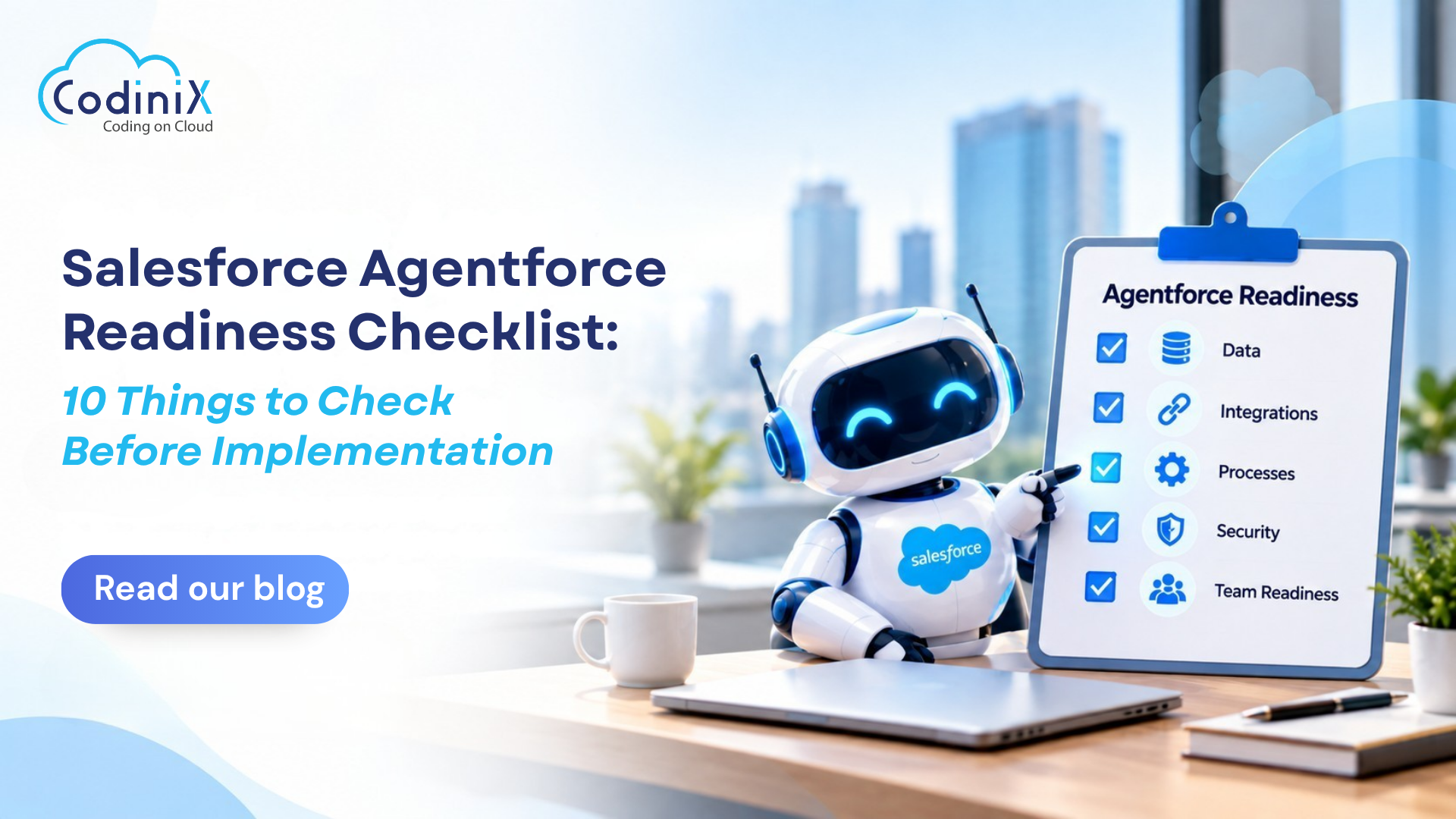
If you're considering a Salesforce Agentforce implementation, this 10-point checklist can help you identify what needs attention before you get started.
What Is Salesforce Agentforce?
Salesforce Agentforce is Salesforce's platform for building and deploying AI agents that can assist with business tasks and customer interactions.
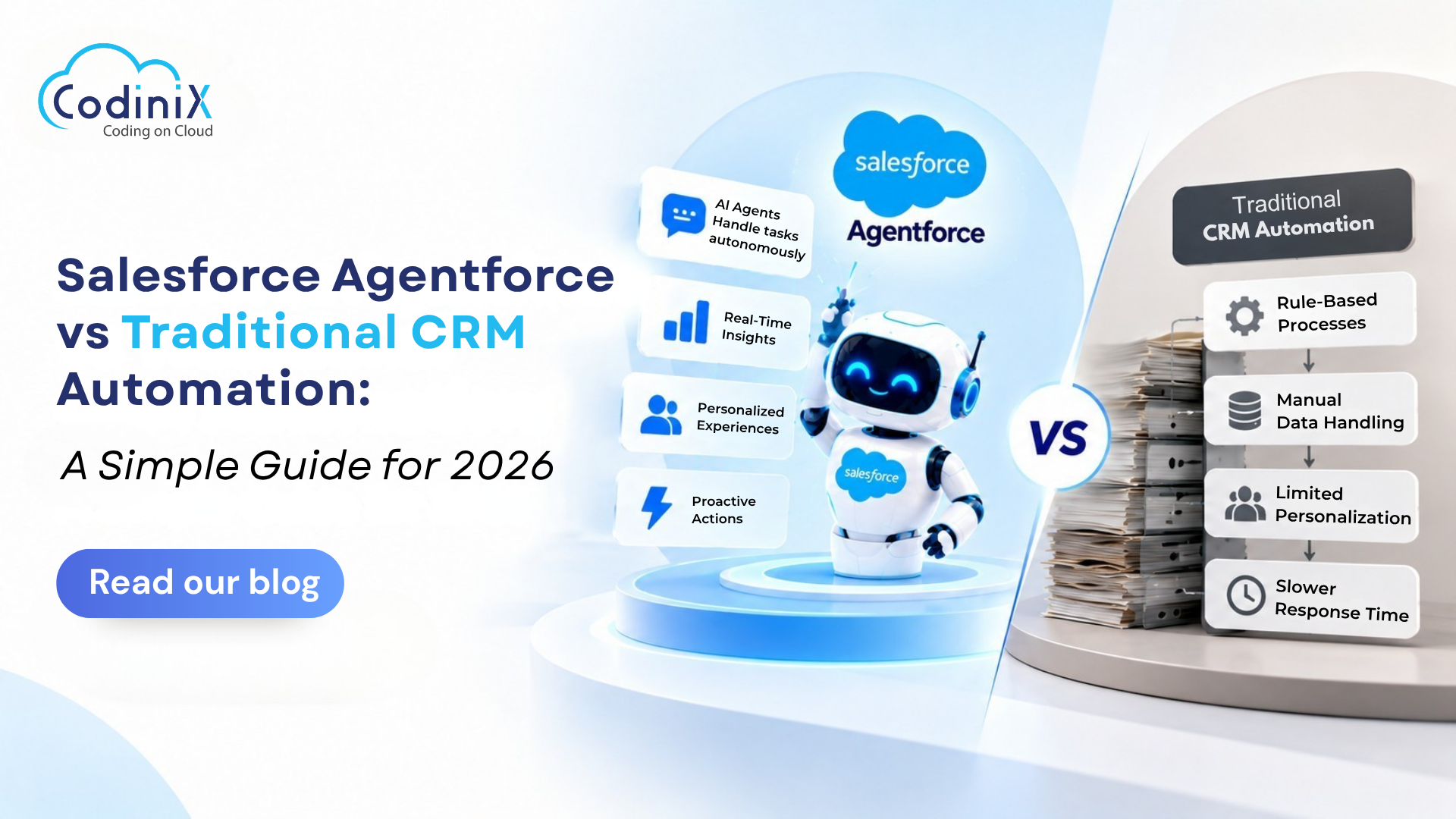
Unlike traditional automation, which generally follows predefined rules, AI agents can use business context to respond to requests and perform tasks within defined boundaries.
For example, a customer service agent could help answer common questions, retrieve relevant information, or escalate an issue when human assistance is required. In sales, Agentforce capabilities can support prospecting, lead qualification, follow-ups, and other parts of the sales process. Salesforce has continued expanding Agentforce across sales, service, commerce, and other business functions in 2026.
The technology is exciting. But successful implementation starts well before the agent goes live.
10 Things to Check Before Implementing Salesforce Agentforce
1. Start With a Clear Business Use Case
Don't start with, "Where can we use AI?"
Start with a specific business problem.
Maybe your service team spends hours answering repetitive customer questions. Perhaps sales representatives spend too much time researching prospects or preparing follow-ups.
These are much better starting points than trying to introduce AI everywhere at once.
Define what you want the agent to accomplish, who it will assist, and what a successful outcome looks like.
2. Check the Quality of Your Salesforce Data
AI is only as useful as the information it can access.
If your CRM contains duplicate contacts, outdated records, missing fields, inconsistent customer information, or disconnected data sources, an AI agent may struggle to provide reliable context.
Before implementation, review your customer, product, service, sales, and knowledge data.
Salesforce's current guidance emphasizes consolidating and structuring relevant business data so agents can retrieve the information they need. Data 360 can help bring data from different sources together into a more consistent foundation for AI-powered experiences.
If your organization needs help preparing or moving data, Salesforce data migration should be considered part of the readiness process.
3. Evaluate Your Existing Salesforce Setup
Agentforce doesn't exist separately from your CRM.
Before implementation, look at your current Salesforce configuration, objects, workflows, permissions, customizations, and business processes.
Ask yourself:
- Is our Salesforce setup still aligned with how the business operates?
- Are there outdated customizations?
- Are important processes documented?
- Are users following consistent workflows?
A strong foundation makes it easier to introduce new AI capabilities without creating unnecessary complexity.
A Salesforce consulting partner can help review the existing environment and identify areas that may need improvement before implementation.
4. Review Your Integrations
Your business probably doesn't run entirely inside Salesforce.
You may have ERP systems, marketing platforms, customer support tools, websites, payment systems, data warehouses, or other applications connected to your CRM.
If an AI agent needs information from these systems, integration becomes critical.
Review which systems need to exchange information with Salesforce and whether the existing connections are reliable.
This is where Salesforce integration can become an important part of your Agentforce preparation.
5. Identify Processes That Are Suitable for AI
Not every process should be handed over to an AI agent.
Start by separating tasks into three groups:
- Good candidates: repetitive, rules-based, high-volume activities.
- Potential candidates: processes that require some judgment but have clear boundaries.
- Human-led: sensitive or complex decisions where human expertise is essential.
For example, answering a common product question may be suitable for an AI agent, while handling a complex customer dispute may still require a human representative.
The goal isn't to replace every human interaction. It's to determine where AI can make employees more productive.
6. Review Security and Access Controls
Giving an AI agent access to business information requires careful consideration of permissions and governance.
Before deployment, review who can access what information and what actions the agent should be allowed to perform.
Think about customer information, financial data, internal documents, employee records, and other sensitive information.
Also define what the agent should not be allowed to do.
A well-designed implementation should include clear boundaries, appropriate permissions, testing, and human escalation paths.
7. Make Sure Your Team Is Ready
Technology adoption doesn't happen simply because the technology works.
Your sales, service, marketing, and operations teams need to understand how AI agents will fit into their daily workflows.
For example, will employees review AI-generated recommendations? When should they take over from an agent? What happens when an agent cannot complete a task?
Give your team clear answers before deployment.
Good user adoption can be just as important as the technical implementation itself.
8. Test Before Going Live
An AI agent shouldn't go straight from configuration to production.
Create realistic scenarios and test how the agent responds.
Try straightforward requests. Then test unusual questions, incomplete information, incorrect inputs, and situations where the agent should escalate to a person.
Salesforce's deployment guidance specifically emphasizes validating agents in a testing environment before moving them into production.
The objective isn't simply to confirm that the agent works. It's to understand how it behaves when things don't go according to plan.
9. Plan for Monitoring and Improvement
Implementation isn't the finish line.
Once an agent is live, businesses should monitor performance, identify problems, review interactions, and improve the experience over time.
Salesforce has also introduced Agentforce Observability to help organizations monitor and optimize their AI agents and measure outcomes.
Set clear metrics from the beginning. Depending on your use case, these might include response time, case resolution, qualified leads, employee productivity, customer satisfaction, or cost savings.
10. Build a Realistic Implementation Roadmap
Finally, don't try to transform everything at once.
Start with a clearly defined use case. Prepare the necessary data. Review integrations and security. Build and test the agent. Deploy it to a controlled environment, measure the results, and expand based on what you learn.
A phased approach can make it easier to manage risk, demonstrate value, and gain internal support.
This is where Salesforce implementation becomes more than simply configuring the platform. It is about connecting technology with your actual business processes and goals.
What If Your Business Isn't Ready Yet?
Being "not ready" doesn't mean you need to put your Agentforce plans on hold.
In many cases, businesses simply need to address a few areas before moving forward. This could include improving CRM data, reviewing existing integrations, updating Salesforce configurations, or defining clearer security and governance processes.
The good news is that these improvements can strengthen your overall Salesforce environment while also creating a better foundation for AI.
The key is to identify the gaps early instead of discovering them after implementation has already started.
How Codinix Technologies Can Help With Salesforce Agentforce
A successful Agentforce implementation involves more than simply setting up an AI agent. Your Salesforce environment, business processes, data, integrations, and automation all need to work together.
Codinix Technologies provides Salesforce solutions that help businesses prepare for and implement AI-powered CRM capabilities. Our expertise covers Salesforce consulting, implementation, customization, integration, data migration, and Agentforce.
Whether you are starting from an existing Salesforce environment or planning a new AI-driven CRM strategy, we can help identify the right use cases, prepare your systems, and build an implementation approach around your business requirements.
The goal is simple: use Agentforce where it can create real value, while keeping the right level of human involvement where it matters.
Ready to Explore Salesforce Agentforce?
Agentforce can create new opportunities across sales, customer service, marketing, and customer engagement. But the best results come from implementing it with a clear plan.
Before getting started, evaluate your data, integrations, workflows, security, team readiness, and business objectives. If those foundations are in place, your organization will be in a much stronger position to make the most of AI agents.
If you're considering Salesforce Agentforce implementation, Codinix Technologies can help you evaluate your current Salesforce environment, identify opportunities for AI automation, and develop an implementation roadmap aligned with your business goals.
Ready to see where Agentforce could fit into your business? Get in touch with Codinix Technologies to discuss your Salesforce and AI requirements.































Leave Your Thoughts!!