Every business using Salesforce has heard the buzz this year. AI agents. Agentforce. "Digital workers."
And if you're like most of the business leaders we talk to at Codinix Technologies, you have one simple question:
"Do I really need this, or is it just hype?"
Good news: you don't need a technical background to answer that. You just need to understand the difference between two kinds of help your CRM can give you. Let's keep it simple.
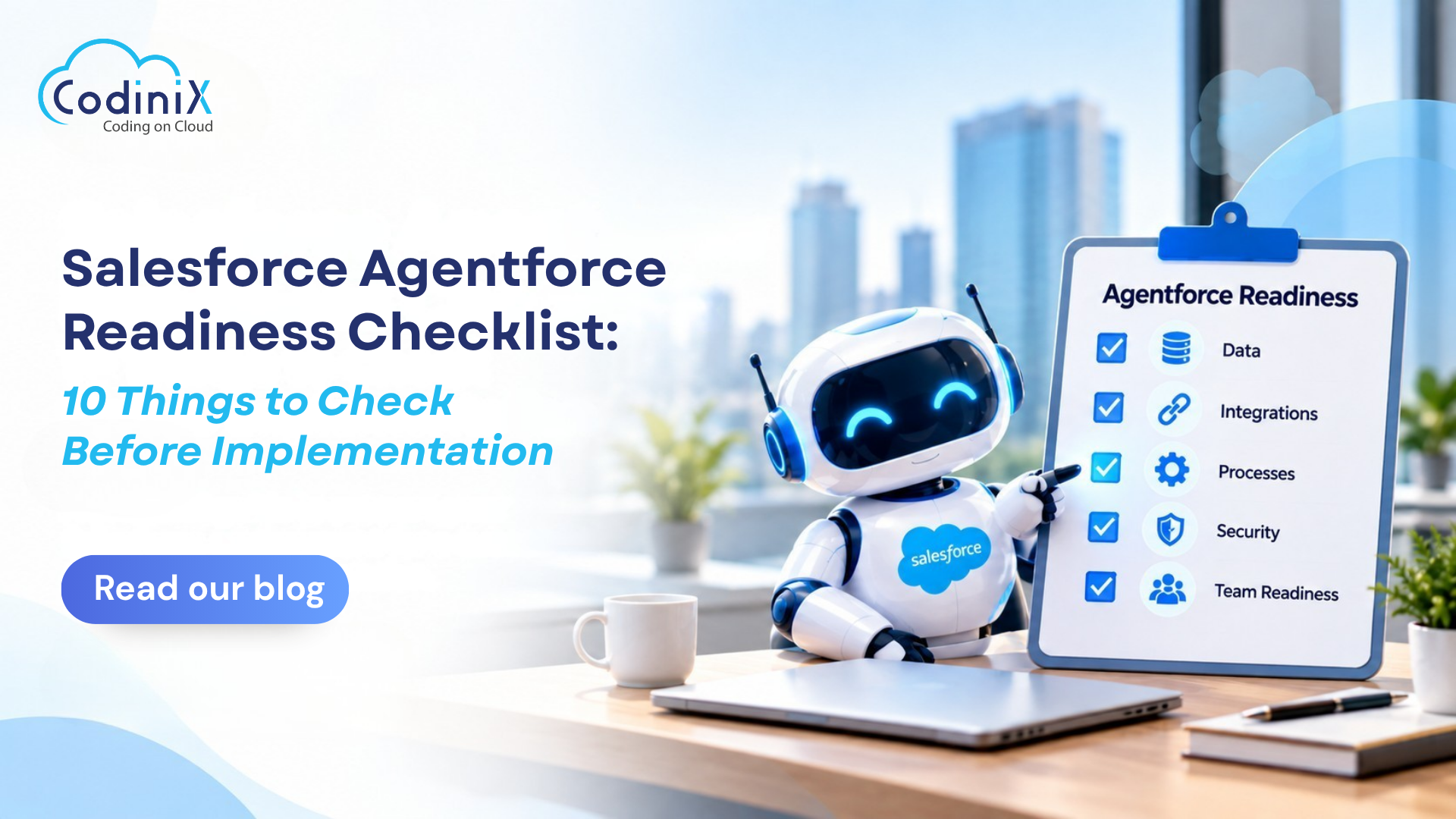
Thinking about trying Agentforce soon? Our Agentforce Readiness Checklist shows what to check first.
Two Kinds of Helpers
Think of your Salesforce system as an office. Inside that office, you can have two kinds of helpers.
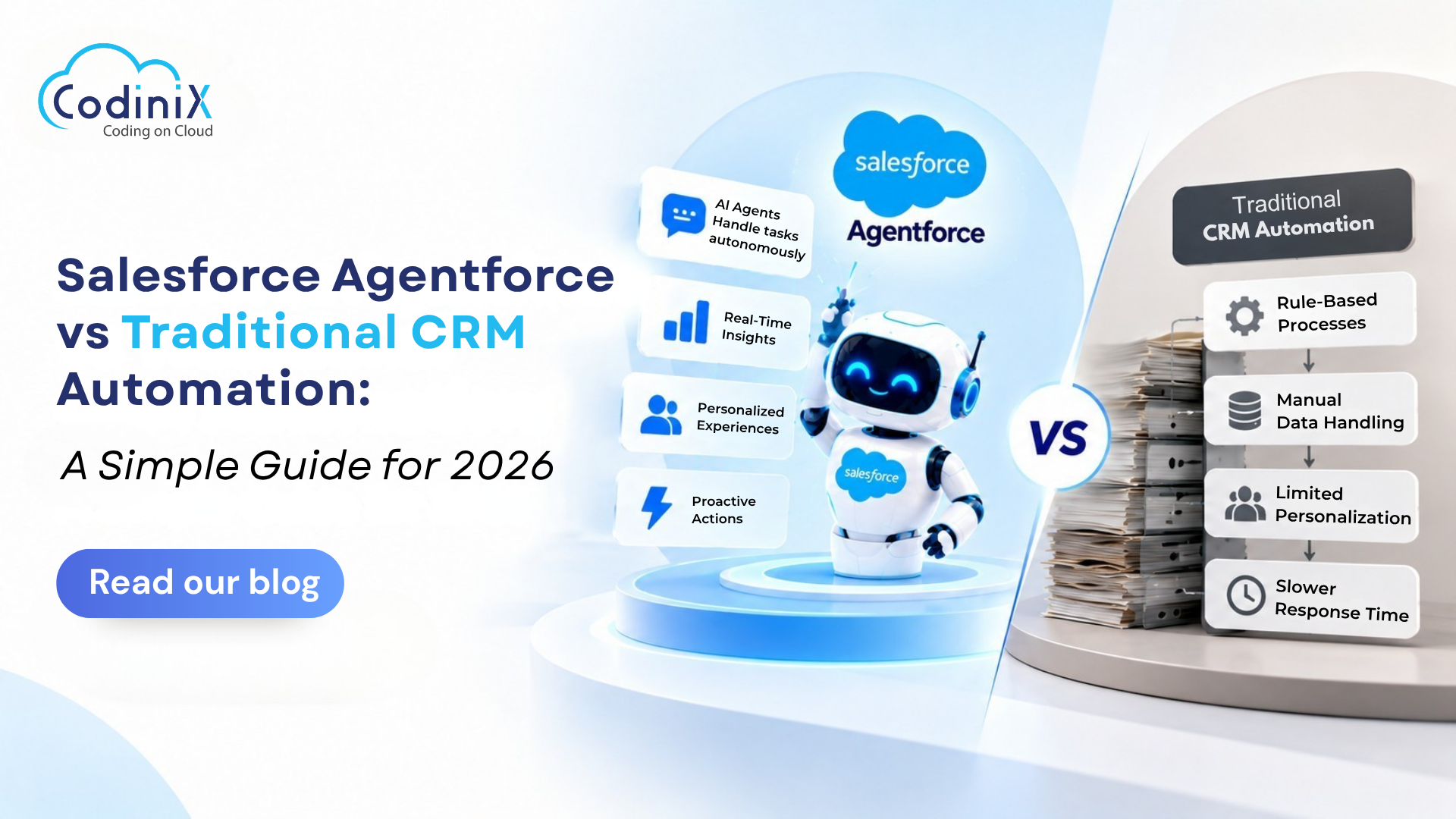
Helper #1: The rule follower. This helper does exactly what you tell it. "When a deal is won, send the invoice." "When a form comes in, give it to Sarah." It never forgets, never gets tired and never asks questions. This is traditional CRM automation, and most companies have used it for years.
Helper #2: The problem solver. This helper can read, understand and decide. Ask it, "Which customers might leave us this month?" and it will look through your data and give you an answer. This is an AI agent. In Salesforce, it's called Agentforce.
Both are useful. They're just good at very different things.
What The Rule Follower Does Best
Rule followers are perfect for jobs that never change:
- Sending a welcome email when someone signs up
- Passing a new lead to the right salesperson
- Asking a manager to approve a big discount
- Updating a record when a payment comes in
These jobs have one right answer every time. You don't want creativity here. You want speed and accuracy. And the best part? This kind of automation is already included in your Salesforce plan.
Where The Rule Follower Gets Stuck
Real customers don't follow rules.
They send long emails. They ask two questions at once. They say "the thing I ordered last week" instead of giving an order number. Any team with a busy support inbox sees this every day. Remove
A rule follower can't make sense of that. It just waits. So someone on your team has to read the message, figure out what's needed and do the work by hand. Over and over again.
That's exactly the gap AI agents are built to fill.
What The Problem Solver Adds
An AI agent can do the one thing rule followers can't: understand.
Say a customer asks for a refund and a new delivery address in the same message. An agent reads it, spots the two requests, finds the order and takes care of both. If something looks unusual, it hands the job to a real person.
And here's the part most people don't expect: the agent often uses the same rules your team already set up. It doesn't replace your existing automation. It decides when to use it.
Think of it as a smart office manager who knows which button to press, and when.
What Changed in 2026
AI agents aren't brand new, but 2026 made them far more practical. Four changes stand out.
1. You can set clear limits: Early AI tools could be unpredictable. Now you can give agents firm rules, like "approve refunds under $50, but ask a human for anything bigger." The AI handles the conversation. Your rules protect the money.
2. Ready-made agents: At Dreamforce in September, Salesforce launched agents built for specific jobs, with names like Casey (customer service), Piper (who qualifies new leads) and Hunter (sales outreach). You no longer have to build everything from scratch.
3. Agents can follow up over weeks: New agents arriving in November can work on one goal over a longer time, like winning back customers who've gone quiet. They remember what happened and check with you before big decisions.
4. AI costs money every time it works: Your regular automation comes with your Salesforce plan. AI agents are usually paid per use. So using AI for simple jobs is like hiring an expert to sort your mail.
Fun fact: Salesforce also launched an agent called Marshall for back-office work, and it's designed to follow the exact same steps every single time. Even Salesforce knows some jobs are better done by the rules.
Quick Quiz: Rules or AI?
Guess before you read the answer.
- Sending each new lead to the right salesperson. Rules. Same answer every time.
- Answering "Where's my order, and can I change the address?" AI. It has to understand the question.
- Approving big discounts. Rules. Money needs clear limits.
- Researching a company before a sales meeting. AI. It's reading and summarising.
- Following up with a quiet customer over three weeks. AI, with you approving the key steps.
Got them all? Then you already know the golden rule: AI does the thinking, automation does the doing.
At a Glance
|
|
Rule follower (traditional automation)
|
Problem solver (Agentforce)
|
|
Best for
|
Repeat jobs with one right answer
|
Messy questions and decisions
|
|
Understands emails and chats?
|
No
|
Yes
|
|
Same result every time?
|
Yes
|
Within the limits you set
|
|
Cost
|
Included in your plan
|
Pay as you use
|
The Honest Truth
AI agents are exciting, but they're not magic. A few things worth knowing:
- Many companies are still testing: Salesforce says Agentforce now earns over $1.5 billion a year. Yet Salesforce Ben estimated that only about 12% of Salesforce customers were using it earlier this year.
- Costs can creep up: One simple-looking request can take an AI several steps behind the scenes. Plan your budget before you grow.
- Messy data, messy answers: If your customer records are out of date, the AI will give confident but wrong answers. Clean data comes first.
- Your setup matters: AI works best when your existing automation is tidy, clearly named and easy to understand.
How To Get Started
- Spot the time-wasters. Where does your team spend hours reading and deciding? That's where AI helps most.
- Keep simple jobs simple. If a task has one right answer, leave it to regular automation.
- Start with one small use case. Prove it works before you expand.
- Protect sensitive areas. Refunds, discounts and personal data should always have firm rules or a human check.
- Track the results. Measure time saved and cost per solved problem, not just how many chats the AI had.
Conclusion: Use Both, Wisely
AI agents aren't here to replace the automation you already have. They're here to take on the work your rules were never able to handle: the messy emails, the tricky questions and the decisions that need a bit of thinking.
The winning formula is simple. Let automation handle the routine. Let AI handle the thinking. And let your people focus on the work only humans can do.
At Codinix Technologies, we've seen that the businesses getting real value from Agentforce aren't the ones chasing the hype. They're the ones who start small, build on what already works and grow from there.
If you're wondering where AI could make a difference in your business, get in touch with Codinix Technologies. We'll look at your setup and give you an honest answer about where AI fits, and where it doesn't (yet).





































Leave Your Thoughts!!