Dynamics NAV / Business Central Modernisation & Cloud ERP Transformation
Dynamics NAV / Business Central Modernisation & Cloud ERP Transformation
By Admin
19 Dec , 2025
Microsoft Dynamics
A mid-sized, fast-growing manufacturing and distribution company functioning in several regions experienced the growing operational pressure caused by the dependence on the fragmented legacy and manual finance. The organisation operated numerous legal entities, warehouses and sales channels, yet they did not share an ERP backbone to enable real-time visibility as well as scalability growth. Finance, inventory management, procurement, and order fulfilment were core business functions that were undercarried out using a mix of on-premises ERP modules, spreadsheets, and disconnected third-party tools.
With transaction volumes growing and business operations expanding into new geographies, the constraints of the old environment became increasingly noticeable. The reporting cycle was also very sluggish and manual. Stock-outs and overstocking were a result of a mismatch in inventory across warehouses. Reporting compliance was laborious, and leadership was not in a position to provide real-time insights into operational and financial performance across the entities.
To overcome such problems, the organisation engaged Codinix Technologies to modernise its ERP environment by moving away from Microsoft Dynamics NAV to Microsoft Dynamics 365 Business Central. The mission was to migrate to a cloud-first, integrated ERP system that could consolidate finance, operations, and reporting into a single source of truth, enabling agility, governance, and data-driven decision-making at scale.
Project Objectives
All the objectives of this engagement were focused on the development of a future-ready ERP base that would be consistent with the growth strategy of the organisation. Codinix was tasked with the following:
Migrate legacy Dynamics NAV instances to Microsoft Dynamics 365 Business Central in a cloud-native architecture
Consolidate finance, inventory, procurement, sales, and operations into a single integrated ERP platform
Facilitate real-time financial and operational reporting of various business units and sites.
Enhance reporting accuracy and minimise manual reconciliation effort.
Enhance compliance, audit preparedness and internal controls.
Scalability to support future expansion, acquisitions and business lines.
Key Challenges
Before the transformation, the organisation experienced a number of operational and strategic roadblocks that limited performance and growth:
Fragmented ERP Landscape: Various business areas had their own customised NAV instances with varying configurations, and consolidation was a complicated and error-prone process.
Manual Reporting & Slow Closures: Financial closing relied too heavily on spreadsheets and manual reconciliations, thereby delaying management reporting.
Inventory Inaccuracy: The absence of real-time stock availability across warehouses led to a demand-supply mismatch and inefficiency in working capital.
Limited Process Automation: Core workflows such as procure-to-pay and order-to-cash were partially manual, increasing operational risk and processing time
Scalability Constraints: On-premise infrastructure and legacy customisations made it difficult to onboard new entities and expand operations
Compliance & Audit Risk: Data decentralisation and incomplete controls augmented the complexity of the audit and regulatory risks.
Technology Stack & Tools
To modernise the client’s ERP ecosystem, Codinix implemented a robust, cloud-first technology stack:
Microsoft Dynamics 365 Business Central (Cloud): Centralised ERP platform for finance, inventory, procurement, sales, and operations
Dynamics NAV to Business Central Migration Framework: Structured migration methodology for data, configurations, and customisations
Power BI: Real-time dashboards for financial performance, inventory health, sales trends, and operational KPIs
Azure Cloud Infrastructure: Secure, scalable hosting environment with built-in resilience and compliance capabilities
API-Based Integrations: Seamless connectivity with third-party logistics systems, e-commerce platforms, and CRM tools
Role-Based Security & Audit Controls: Configured within Business Central to strengthen governance and access management
Our Solution & Approach
Codinix, as an ERP modernisation partner, delivered the transformation within a business-aligned implementation structure that minimised disruption and maximised long-term value.
ERP Architecture Redesign
The on-premises ERP environment was rearchitected to a cloud-native Business Central environment. The main business operations, such as finance, inventory, procurement, sales, and project accounting, were consolidated into a single ERP backbone. This removed data silos and generated a centralised single source of truth among business units and locations.
Data Migration & Process Harmonisation
Codinix realised a gradual data migration process that involved the migration of master data, past transactions and outstanding balances. Old customisations were normalised and compared to current Business Central extensions to minimise technical debt. Standardisation of business processes across entities was done to provide consistency in financial reporting, inventory valuation, and workflows in operations.
Workflow Automation & Process Optimisation
Business Central workflows and approval hierarchies were used to automate manual processes across procure-to-pay, order-to-cash, and inventory replenishment. This has reduced processing time, minimised manual errors, and enhanced transaction traceability. The ERP had standard operating procedures that contributed to consistency and governance.
Power BI Integration for Real-Time Intelligence
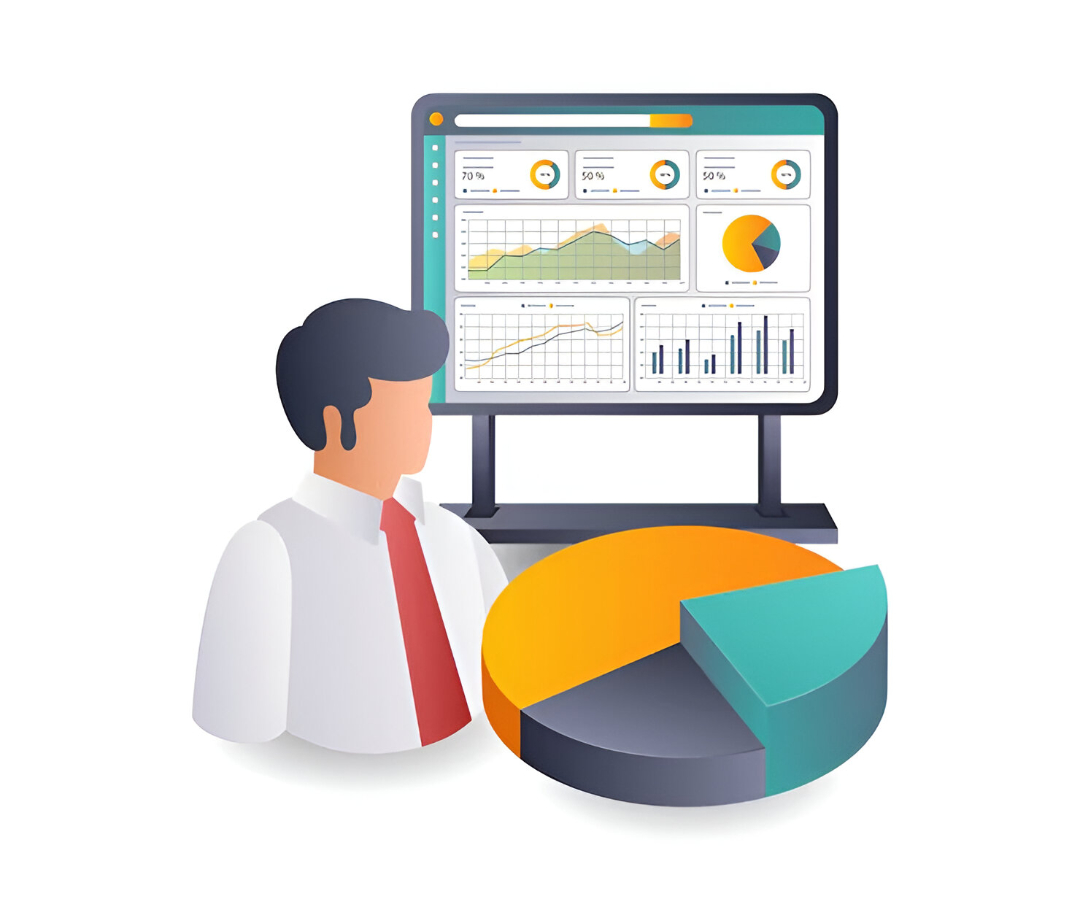
Power BI was integrated with Business Central to provide operational reports and executive dashboards. Leadership was able to see, in real time, cash flow, receivables, payables, inventory turnover, sales performance, and profitability by business unit and geography. This has replaced the traditional spreadsheet-based reporting with interactive analytics.
Change Management & User Enablement
Codinix provided finance, operations, and leadership training programmes. The role-based training ensured that the users were able to make good use of the new system on the first day. Detailed documentation and post-go-live support were accorded to hasten adoption and eliminate reliance on manual workarounds.
Zero-Disruption Go-Live Strategy
Migration was done through a phased rollout model, facilitated by parallel runs, data validation checkpoints, and contingency planning. This guaranteed continuity of business through the transition, and there was no interference with basic financial operations, order processing, or warehouse operations.
Results & Business Impact
The ERP modernisation delivered measurable improvements across financial control, operational efficiency, and strategic visibility:
40%+ reduction in financial close cycle time through automated reconciliations and standardised reporting
Significant improvement in inventory accuracy, reducing stock-outs and excess inventory across warehouses
Real-time management reporting via Power BI dashboards, enabling faster and more informed decision-making
Lower operational risk due to workflow automation and embedded approval controls
Improved scalability, enabling rapid onboarding of new business units without additional infrastructure overhead
Enhanced audit readiness and compliance posture through centralised data governance and role-based controls
By transitioning to a cloud-first ERP platform, the organisation achieved a unified operational backbone that supports both current scale and future expansion.
Conclusion
This Business Central to Dynamics NAV change was a turning point in the ERP modernisation process at the organisation. Codinix Technologies has facilitated more operational efficiency, financial control, and decision-making critical to the enterprise by substituting all fragmented, on-premise systems with a comprehensive cloud ERP platform.
In addition to modernising technology, the programme generated enduring business value - streamlining core processes, enhancing governance, and giving leadership real-time visibility on drivers of performance. With the new ERP foundation, the organisation is in a position to grow with confidence, leverage upcoming digital opportunities, and respond quickly to changing market needs.
Codinix, as a reliable ERP modernisation partner, showed that ERP change does not have to be disruptive. With a managed migration strategy, cloud management, and a business-delivery orientation, we assisted the organisation in creating a resilient, future-driven ERP ecosystem that would support long-term growth.






























Leave Your Thoughts!!