Build Once, Connect Anything: An API Integration Framework for Scaling Businesses
Build Once, Connect Anything: An API Integration Framework for Scaling Businesses
By Admin
20 Nov , 2025
Integrations
Every scaling business eventually arrives at the same problem, wearing a different disguise each time. A new sales channel needs to speak with the ERP. A recently acquired company runs on a different CRM. A third-party logistics provider requires a data feed that the current stack was never actually designed to produce. And each time, the answer is basically the same: build another integration. Hire someone to manage it and hope it holds when something on either side changes.
For one fast-growing technology-enabled distribution business, this wasn’t some future risk; it was already the present situation. Eleven separate point-to-point integrations were spread across their technology stack. Four of them had broken in the previous twelve months. The engineering team was spending more hours maintaining existing connections than creating anything new. And every time a business stakeholder asked whether two systems could be linked, the honest reply was: yes, but it will take months and cost more than you expect.
The organisation engaged Codinix Technologies not to build yet another integration, but to build the underlying infrastructure that would make all future integrations faster, less expensive, and more durable than anything they’d seen before.
Client Overview
The client is a distribution business operating at scale across multiple product categories, supplier relationships, and fulfilment channels. Their technology stack had grown organically over several years and it ended up including an ERP, a CRM, a warehouse management system, a customer-facing ordering portal, two marketplace integrations, a third-party logistics provider feed, and a few internal operational tools.
Each of those systems had been plugged as the business grew, there was no common architecture. No shared data standards either, and nothing centralised for visibility into integration health. So the whole ecosystem worked, most of the time, but it still needed constant attention, and it didn’t give any real foundation for the expansion rate the business was planning.
Business Challenges
The point-to-point integration model had reached its limits. The specific issues weren't one thing:
Integration maintenance was taking about 40% of engineering capacity, so there wasn’t enough room left for product development, performance work, and also those new connections the business kept asking for.
There was no centralised monitoring either, so most times integration failures weren’t caught by the engineering team via a system alert. Instead, operational staff noticed it later, from data discrepancies.
The connections were brittle. If either system released an update, the integration would break, which meant requiring emergency developer attention and the most difficult part was data gaps. Those gaps were hard to rebuild later, retrospectively, it was not straightforward.
Data standards weren’t consistent across integrations. Different integrations used different field names, different formats, and different conventions, so building shared reporting or cross system analytics was impossible without doing yet another layer of transformation work.
Then the timelines which were incompatible with what the business needed. The average build time was 14 to 18 weeks, which made it really hard to respond to commercial opportunities that demanded faster connectivity.
And last but not least, for several legacy integrations, there was no documentation and basically no institutional knowledge. So we ended up relying on specific individuals, and the risk was huge if they weren’t available, even for a short while.
Why Point-to-Point Integration Could Not Continue
The organisation hadn’t stumbled into point-to-point integration without thought, no. Each connection, at the time, was the right decision it seemed, quick to deliver, scoped to one specific need, and not asking for broader architectural thinking. But the catch was that it was cumulative.
Each new integration added maintenance overhead that compounded with every system already in place.
There was no mechanism to reuse logic, transformations, or authentication patterns across integrations, meaning equivalent work was done from scratch every time.
The lack of a centralised layer meant there was no clear place where data quality, error handling, or the security policy could be enforced consistently. It was all spread out, and that made it harder to tighten things up.
Over time the engineering team’s growing maintenance burden became self-reinforcing. Less capacity for new builds meant longer timelines, then business stakeholders lost their confidence in the team’s ability to deliver, and that pressure usually led to shortcuts, which then generated more maintenance overhead.
Codinix Technologies assessed the situation and recommended against building yet another bespoke integration. Instead, they suggested an API integration framework, a reusable, centrally managed infrastructure layer, through which all current and future system connections would be routed.
Solution: Codinix's API Integration Framework
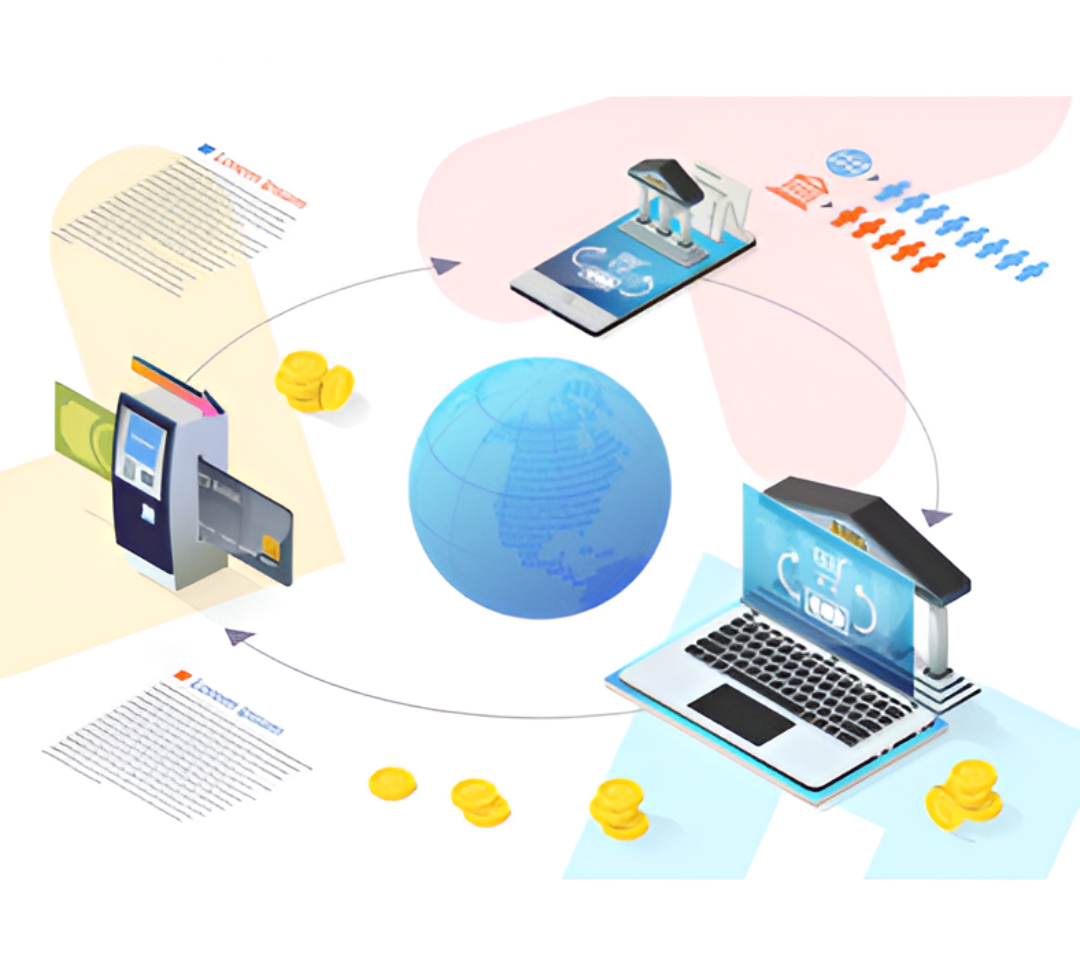
Codinix Technologies put together and rolled out a centralised API integration framework, like the connective tissue that links everything across the organisation’s broader technology ecosystem. Instead of just wiring systems to each other directly, which gets messy fast, all the integrations ran through the framework. That way the team could share infrastructure, reuse components that were already proven, and keep governance centralised across every connection in the stack.
The core bits of the solution were:
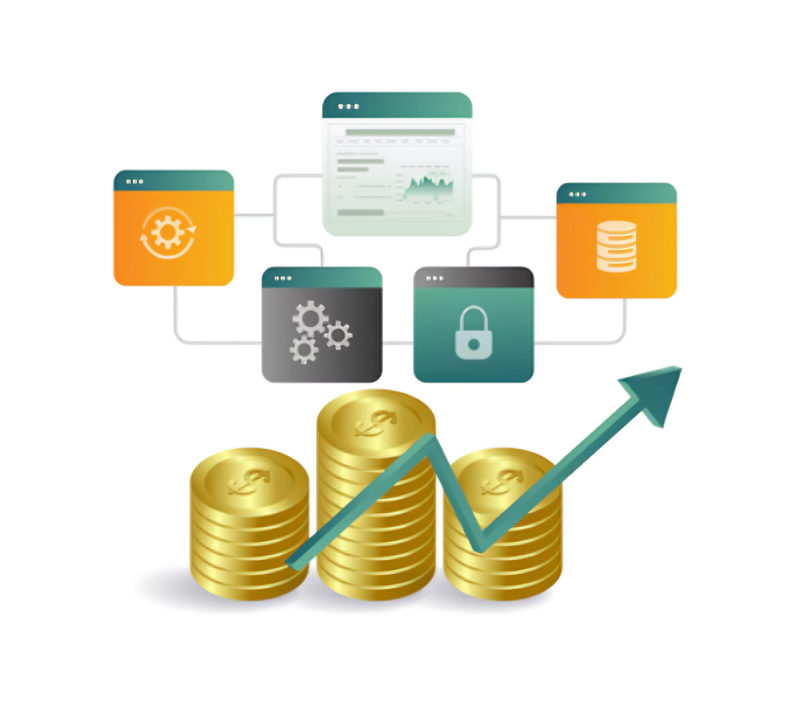
A centralised API gateway, the single entry and exit point for all data flows between systems. It handled authentication, rate limiting, and security policies at the gateway layer, rather than pushing those same controls into every single integration later on.
Reusable Connector Library: There is a reusable connector library that includes pre-built, well tested integration bits for common patterns, like order syncing, inventory updates, customer record managing, and fulfilment event handling. One can easily configure it and deploy for new connections without having to start building from scratch.
Universal Data Transformation Layer: Before the data actually reached where it was going, there was a universal transformation layer that standardised the formats, field labels, and overall conventions. That way the information stayed consistent across every system that got connected, no matter what it was.
Centralised Monitoring and Alerting: With real-time monitoring in place, teams got full visibility across all integrations. Automated alerts then surfaced failures, latency spikes, and also data quality issues, before they caused disruptions in operations.
Event-Driven Architecture: Instead of leaning on scheduled batch jobs, the framework went with an event-driven architecture. Real-time event triggers moved the data soon as business events happened, or at least close to it, and not hours later.
Built-in Error Handling: Resilience was baked in through automated error handling, plus configurable retry logic. Temporary failures, if they showed up, were resolved automatically, so manual fixing happened less often.
Developer Self-Service: Solid documentation and self-service tools helped internal engineers build and configure new integrations using reusable pieces. This meant they didn’t have to rely on Codinix for routine additions, and things moved faster, honestly.
Version Management: API changes were handled using version-controlled connectors. Older connector versions stayed backwards-compatible while newer API versions were introduced, keeping integrations running without interruption.
Key Takeaways
This engagement with Codinix Technologies showed how the compounding cost of pairwise integration looks once you’re at scale and also what becomes possible when the underlying architecture is made to support growth, not just react to it.
Every point to point integration is in a way a future maintenance promise. You can see the cost of building it upfront. The cost of maintaining it, handling outages, and eventually replacing it spreads across months and years, so it’s easy to overlook until it’s quietly consuming a big slice of engineering bandwidth.
Building a connector once, making it configurable, and rolling it out across multiple use cases is pretty different from building the same kind of connectors again and again from scratch. And the economics keep compounding with every new connection you add.
Centralised monitoring changes how systems and operations relate to each other. When failures get detected in minutes instead of being found hours later by operational staff, the business impact stays bounded, rather than compounding into something worse.
Integration speed is basically a commercial capability. A business that can connect a new system in three weeks can pivot toward opportunities, onboard new partners, and absorb new tools at a pace a business with 18-week integration cycles just can’t match.


































Leave Your Thoughts!!